Blockchain-Enabled IoT Security for Smart Homes
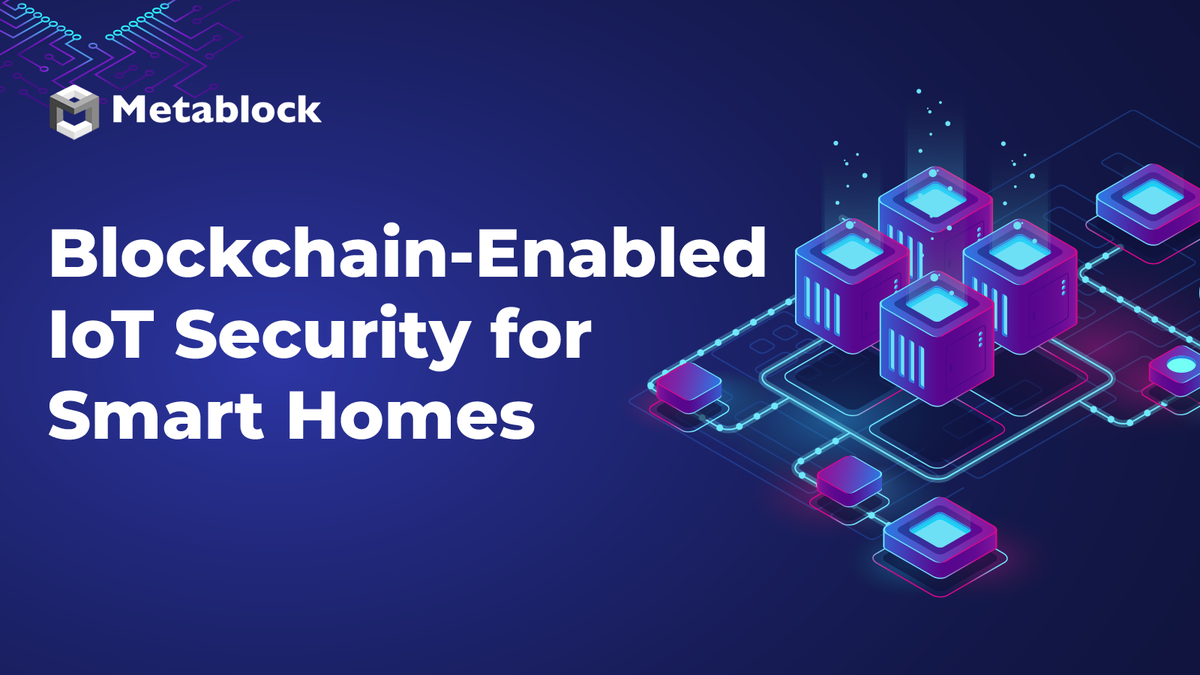
The modern smart home is increasingly defined by connectivity. From intelligent lighting systems to voice-controlled assistants and internet-connected security cameras, everyday household devices are now part of the Internet of Things (IoT).
While this connectivity delivers convenience and efficiency, it also introduces new security and privacy concerns. As smart homes grow more complex, traditional centralized security models are showing their limitations. In this context, blockchain technology is emerging as a compelling, forward-looking approach to strengthening IoT security.At its core, blockchain provides a decentralized, tamper-resistant method for recording and validating information. Applied to smart homes, this decentralization could fundamentally change how devices authenticate themselves and communicate.
Rather than relying on a single cloud server or manufacturer-controlled hub, each device could participate in a distributed network where actions are verified collectively. This approach reduces reliance on central points of failure, which are often targeted in cyberattacks.Ethereum, as a widely known blockchain platform, provides a useful example of how this might work. Through smart contracts, self-executing programs stored on the blockchain, rules governing device behavior could be enforced automatically. A smart lock, for instance, might only respond to access requests that meet predefined conditions encoded in a smart contract.
These conditions could include verified digital identities, time-based permissions, or approval from multiple trusted devices within the home. Because the logic is transparent and immutable, unauthorized changes become far more difficult.Another potential advantage of blockchain-enabled IoT security lies in device identity management. In many current smart home setups, devices rely on simple credentials or manufacturer-issued identifiers that can be spoofed or stolen. Blockchain-based systems could assign each device a unique cryptographic identity recorded on a shared ledger. Any attempt by an unknown or altered device to join the network would be immediately apparent.
Over time, this could help create self-verifying smart homes, where trust is established through mathematics rather than centralized oversight.Privacy is also a significant consideration. Smart homes generate large volumes of sensitive data, including behavioral patterns and occupancy information. Blockchain-based architectures could allow homeowners to retain greater control over this data by limiting who can access it and under what conditions.
Instead of transmitting raw data to external servers, devices might log encrypted proofs of activity on the blockchain, revealing only what is necessary for the system to function. This shift aligns well with growing public concern over data ownership and digital privacy.Looking ahead, the integration of blockchain and IoT suggests a more autonomous smart home ecosystem. Devices could coordinate securely without human intervention, negotiating tasks such as energy usage, maintenance alerts, and temporary guest access.
A homeowner might grant short-term access to a service provider through a blockchain-based permission that automatically expires, eliminating the need for manual oversight. These scenarios remain largely speculative, but they highlight how decentralized technologies could enable smarter and safer living environments.From a broader perspective, blockchain-enabled IoT security represents more than a technical upgrade. It reflects a shift toward systems that prioritize resilience, transparency, and user control. For readers interested in blockchain as a long-term technological trend, smart homes offer a tangible and relatable use case, one that bridges abstract concepts with everyday life.While widespread adoption will take time and practical challenges remain, the direction is clear.
As smart homes continue to evolve, security models will need to keep pace. Blockchain, particularly through flexible platforms like Ethereum, offers a promising foundation for envisioning the next generation of secure, privacy-aware smart homes.