Tokenizing Access in a Subscription World
As the global economy increasingly shifts from ownership to access-based consumption, subscription models have become the dominant framework for delivering digital products and services. From entertainment and software to education and professional communities, recurring revenue models now underpin much of the modern digital experience. However, while subscriptions have created predictable revenue streams for businesses, they have also reinforced centralized control over access, identity, and user participation.
Tokenization presents a compelling evolution of this model.
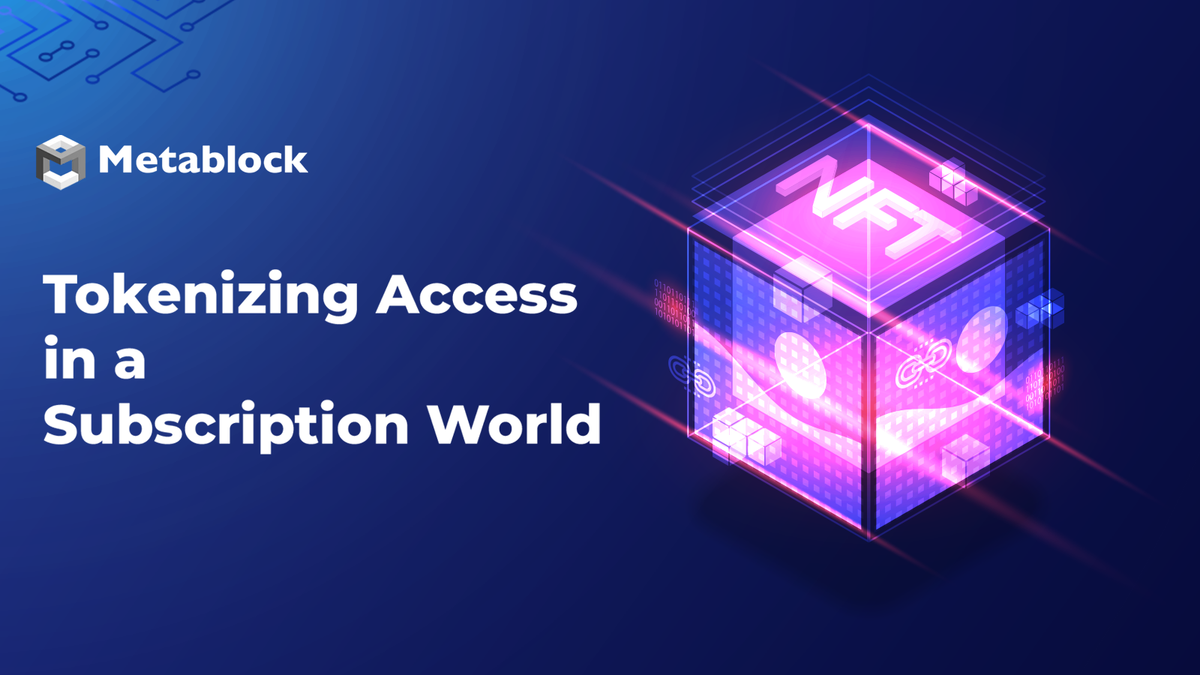
At its core, tokenizing access refers to representing memberships, permissions, or usage rights as blockchain-based digital assets. Rather than relying solely on centralized databases to manage subscriptions, tokenized systems enable access rights to become portable, programmable, and verifiable across platforms.
In the traditional subscription economy, users pay continuously for temporary access without accumulating transferable value. Once a subscription ends, access is revoked entirely, regardless of the customer’s tenure or contribution to the platform ecosystem. This structure benefits platform operators but often limits user flexibility and long-term engagement.
Tokenization introduces a fundamentally different framework.
By converting access rights into digital tokens, organizations can create systems where memberships are not only functional but also interoperable and, in some cases, transferable. A tokenized subscription could allow users to temporarily delegate access, resell unused portions of a membership, or unlock services across multiple ecosystems. This transforms subscriptions from static service agreements into dynamic digital assets.
For enterprises and creators, the implications are significant. Tokenized access models can support tiered membership structures, automated renewals through smart contracts, and loyalty-driven incentive systems. They also create opportunities for enhanced customer engagement through exclusive access privileges, governance participation, or reward mechanisms embedded directly into the token architecture.
Perhaps most importantly, tokenization has the potential to reduce fragmentation across digital ecosystems. Today, subscriptions operate largely in isolation. A user’s membership on one platform typically carries no utility beyond that environment. Tokenized infrastructure, however, creates the possibility for interoperable digital identities and shared access frameworks, enabling partnerships and network effects that are difficult to achieve under traditional subscription models.
Early implementations of tokenized access are already emerging through blockchain-based gaming platforms, token-gated communities, decentralized media ecosystems, and digital event infrastructure. While much public attention surrounding blockchain technology has focused on speculative assets, the longer-term value proposition may lie in utility-driven access management and programmable digital ownership.
Despite its promise, widespread adoption remains dependent on several factors. Regulatory clarity, improved user experience, and scalable infrastructure will all play critical roles in determining whether tokenized access can move beyond niche applications into mainstream commercial adoption. Organizations must also ensure that blockchain integration serves a clear operational purpose rather than functioning as a purely experimental feature.
Nevertheless, the direction of travel is increasingly evident. As consumers demand greater flexibility, transparency, and control over their digital experiences, tokenization offers a framework that can redefine how access is distributed and managed in a subscription-driven economy.
In the years ahead, tokenized access may not replace subscriptions entirely, but it is likely to reshape them in profound and lasting ways.