Ownership, Rewritten in Code
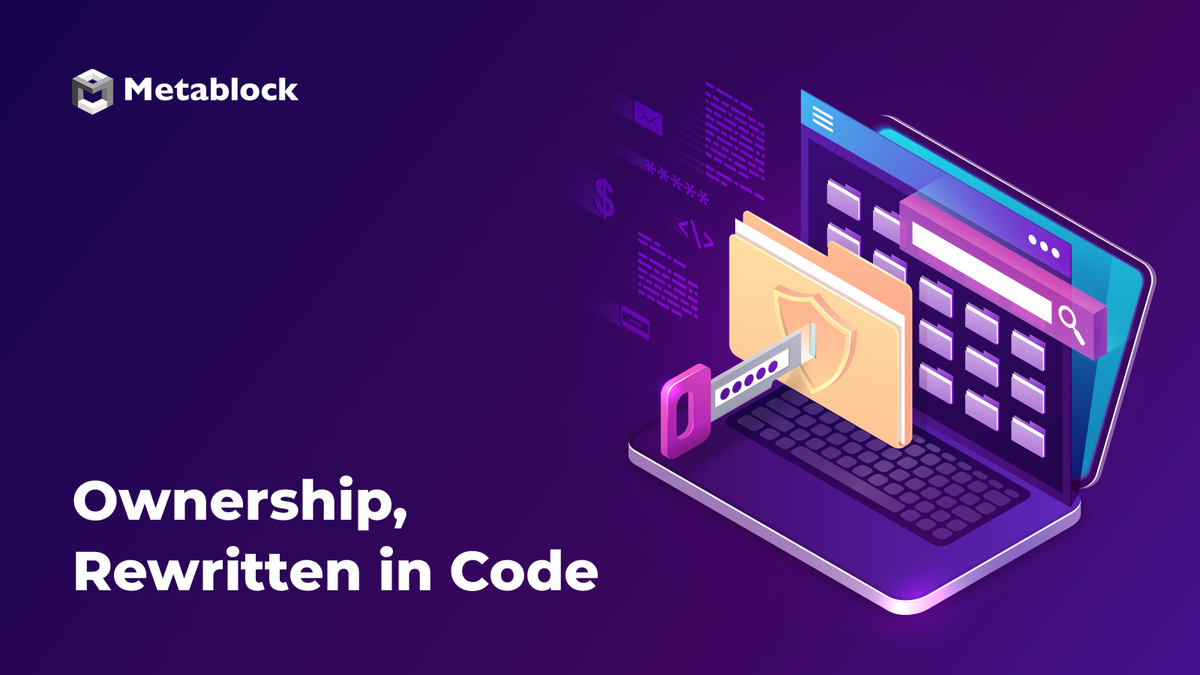
The concept of ownership has historically been defined and enforced through legal systems, intermediaries, and institutional trust. However, the rise of blockchain technology is fundamentally reshaping this paradigm by introducing programmable ownership rights: digital assets whose rules of possession, transfer, and use are embedded directly in code. This shift represents not merely a technological innovation but a structural transformation in how ownership is conceptualized, executed, and enforced.
At the core of this evolution is blockchain, a decentralized, immutable ledger that enables transparent, verifiable record-keeping without reliance on centralized authorities. Through blockchain, ownership is no longer solely a legal abstraction, but becomes a cryptographically secured, programmable construct. Smart contracts, self-executing pieces of code deployed on blockchain networks, enable this programmability by defining precise conditions under which assets can be transferred or modified.
Programmable ownership rights are most visibly manifested in digital tokens, particularly non-fungible tokens (NFTs) and tokenized assets. NFTs, for example, allow for unique digital items, such as artwork, music, or virtual real estate, to be owned, transferred, and even monetized with embedded rules. These rules can include royalties for creators on secondary sales, time-bound access rights, or conditional transfers triggered by predefined conditions. Such features are difficult, if not impossible, to enforce consistently in traditional systems.
Beyond digital art, the implications extend into real-world asset tokenization. Physical assets, such as real estate, equities, and commodities, can be represented as digital tokens on a blockchain, each governed by programmable ownership logic. This introduces efficiencies in fractional ownership, liquidity, and cross-border transactions. For instance, a property can be divided into tokenized shares, enabling multiple stakeholders to own and trade portions seamlessly, with ownership records updated in real time.
Another critical dimension is reducing intermediaries. Traditional ownership systems often require brokers, registries, and legal enforcement bodies to validate and execute transactions. Programmable ownership rights, by contrast, rely on code and consensus mechanisms to automate these processes. This not only reduces costs and delays but also minimizes the risk of human error and manipulation.
However, this emerging model is not without challenges. Legal recognition of blockchain-based ownership remains inconsistent across jurisdictions, raising questions about enforceability in disputes. Additionally, the rigidity of code can be both a strength and a limitation, as poorly designed smart contracts may lead to unintended consequences that are difficult to reverse. Security vulnerabilities and regulatory uncertainties further complicate widespread adoption.
Despite these challenges, the trajectory of programmable ownership rights is clear. As blockchain infrastructure matures and legal frameworks evolve, the integration of code-driven ownership models is likely to expand across industries. This convergence of technology and property rights has the potential to democratize access, enhance transparency, and redefine trust in economic systems.
In conclusion, programmable ownership rights represent a foundational shift in the architecture of ownership. By embedding rules directly into digital assets, blockchain technology is enabling a more efficient, transparent, and autonomous system of value exchange. As adoption grows, this innovation may well become a cornerstone of the digital economy.